Tag Archives | bramaking

Lingerie Friday: Lilac Lace

This has been a relatively quiet Christmas season in our house, all the better because January is going to be a very full month. I’ve been spending the last week or so finishing up some creative projects so my brain and sewing area is clear for the coming new year! For today’s Lingerie Friday I thought it’d be fun to share one of my latest sets with a bra based on one of the patterns I’m using in the sew-along.

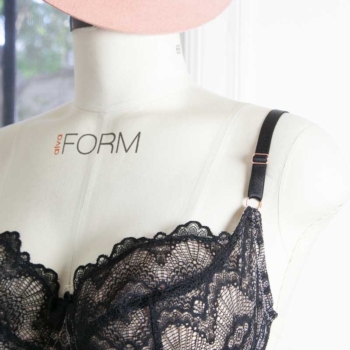
lilac lace bra

I love the hunt for nice laces and good elastic. Some of my favorite lingerie notions have come from the remotest corners of the internet–usually not a well-designed web 2.0 shop that blings “Lingerie Supplies”! I’m a ninja googler. Still, it’s always nice to find something locally, and I did on a recent adventure to Texstyles, a newish fabric store in South Austin. It’s a tiny blink-and-you’ll-miss-it storefront simply labeled “FABRIC” with a screenprinted banner. Next to a breakfast taco van–a pretty good sign, as just about everything great in Austin is within reach of a breakfast taco. (It’s all about the salsa!)

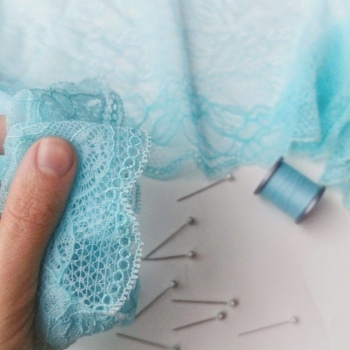
Texstyles might be teeny and obtuse but it’s crammed with apparel fabrics–silks, knits, wools, a little bit of everything. And there there were all the baskets of elastic and lace trims in the window. I was encouraged to “just dump them out and find what you need and if you don’t, write it down and I’ll find it for you!” I like that kind of thinking, sort of like having a personal shopper for the L.A. downtown fabric district, which is where they visit monthly for their stock. Among all the reasonably priced baskets of elasticated goods I found a few bra trims and this delicate and very soft lilac stretch lace fabric.

The lace was perfect for a pair of ladyshorts and some other knickers but I also wanted to see if it could turn into a pretty bra as well.

lilac lace set

The undies are a new pattern I’ve drafted. I’ve fallen a little in love with high-waisted knickers with panel designs, and I wanted this one to be entirely seamless except for the panel. I still have some pattern tweaks to work out and I’m not so hot about that big picot elastic, a little too frou for my taste, but it was a good trial run.

lilac-bra-display

lilac-bra-form2

When I first made the Pin-up Girls pattern, it was hard to see past the plain and what I thought was old-fashioned look of the bra on the envelope. But I’ve found it’s incredibly easy to alter the pattern to something closer to my style or a more contemporary aesthetic. I’ve made several bras using the Pin-up pattern more or less as a block–many of which I haven’t blogged about. In my experience most important part of any bra pattern starts with the fit of the bra band, underwire and cradle. The cup style is pretty easy to modify. On this bra I made a pretty basic change by widening the strap placement and changing the cups’ side shaping for more underarm coverage. On me, the result looks closer to the demi bras I am used to wearing.

There are a lot of different ways to finish off the top of a cup and you can see on this one there is no trim or scalloped edge, but a clean finish to the edge. The cup is fully lined in sheer tricot for stability and to keep that edge from stretching out, I stitched in some narrow clear elastic to the seam allowance. It’s very invisible and feels really soft when I’m wearing it.

As you can probably tell from my previous lingerie posts, I’m always looking for fun ways to shoot lingerie. When I lay them flat on a surface, it’s hard to see details and tell what kind of form they have. When they’re hanging against a backlight, you can revel in the light and sheer. On my booty mannequin, you get a feeling for how they take shape. (Not that I have this shape, and I prefer to save these secrets for my man, but it’s close enough!)

I hope you all have a wonderful weekend and Christmas. We’re off to the *shudder with cold* midwest to visit my family!

· Comments { 10 }

Bramaking Sew-Along Prep: Materials and Supplies

Howdy everybody! Today let’s talk a bit about different materials you’ll need for your bra. There’s still over a month before the sew-along, so this will give you time to gather most of what you need.

I’ve included a basic material checklist at the bottom, but some of you will probably enjoy buying a bramaking kit, which makes it simpler to collect most of the little notions. Not all bra kits are the same, however, so do read the bit about kits below, and make sure to compare them to your pattern’s requirements.

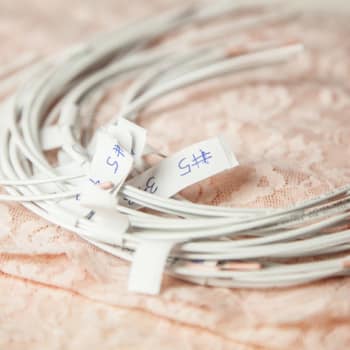
When shopping, it’s important to locate your correct underwire size. If this is your first bra, I highly recommend buying underwires in the size you think you are and then one size up and one size down. Just 1/4″ could make a massive difference in comfort. You might be surprised by what ends up being comfortable. (And yes, I was wearing the wrong size underwire for many years so I can testify.)

What you choose for your bra fabric depends on your experience, and what kind of support you need or want. Those of you with experience in bramaking or who have a different pattern than the ones I chose may want to branch out and try some new fabrics or techniques.

FOR THE CUPS AND CRADLE

The patterns we are making require some kind of stable cup fabric that does not stretch. If you want to use a stretch lace, lycra, or anything with spandex, you’ll have to either line or interface the cup in some way. The bridge will always need to be lined or interfaced, unless you are using a very stable fabric.

Traditional bra fabrics: Duoplex, Simplex, bonded or fused tricot. Of these, (I personally like Simplex, which has a nice drape and is very soft on the skin.) These are all satin-y tricot/raschel fabrics and are easy to sew.

Natural fibers: Woven cottons or silk satin like a charmeuse–a beautiful bra fabric. Keep in mind that woven cottons don’t tend to be t-shirt-friendly (fabrics stick to it) and sometimes the seams won’t lay as smoothly. I love silk bras and I take good care of them, but they are not sweat-stain-friendly (living in Texas, ask how I know!).

Lace: A rigid lace made for lingerie is perfect as a cup fabric. Lingerie stretch laces are another option and usually more widely available. Sewing stretch laces do require a little bit of experience in fitting. They will also need a stable lining as I mentioned above. Some of you may want to experiment with using lace or some kind of decorative mesh on the outside of your cups or cradle. There are many different ways to use it. For some inspiration, check out some of the bras by Sigrid, Katherine and Novita–some of my favorite bra-making bloggers who have used lace so beautifully. I will demonstrate one way during the sew-along to give you some ideas.

For linings: 15 denier tricot or 40 denier tricot. In some places these fabrics are simply called “tricot” or net. These are very useful fabrics to have around in bramaking. The 15 is very sheer and stretches just a little. The 40 is more opaque. Some of the kits will include a bit of this for lining. I like to stash some in neutral colors because I use it everywhere. It is very useful as a stable lining for the bridge and cradle area (and almost all my RTW bras use it for this). Some bramakers like to use powernet for lining. I don’t have a lot of experience with this, so perhaps someone can chime in about it!

Instead of lining, you could also stabilize a fabric with fusible tricot interfacing, often used for knits. Look for something that can be fused at a cooler setting on your iron.

l to r: 40 denier tricot, 15 denier tricot, fusible interfacing

FOR THE BAND/WINGS

Ideally, your band should use a fabric with about 50% stretch and good rebound.

Powermesh/powernet: Powermesh comes in many weights and qualities. Some women will need a heavier weight powermesh. I like medium weights if I can find them. They are soft and drape well but strong enough. Very lightweight powermeshes are useful as a lining for stretchier band fabrics but are really only good for the lightest of bras or even knickers. (The ladyshorts photo in my sidebar is made from a lightweight printed powermesh.)

(l to r: heavy, med, lightweight powermesh)

Lycra: These can be good band fabrics but check the descriptions as some lycras may be too lightweight or too stretchy for you. You’ll have more options in color choices, which is probably why folks making bras tend to use lycra instead of powernet.

For now, try to avoid using jersey as your band fabric. This is something you might want to try later but jerseys often get narrower as they are stretched and are quick to lose their elasticity. If you have allergies or need/want a natural fiber bra, you can try making a band from woven materials, but you will have to experiment with the pattern’s band length to find a comfortable wearing ease.

A note about lycra for those who are new to sewing lingerie or swimwear: For the most part, fabrics labeled “lycra” by lingerie, swim or dance fabric shops are tricot and raschel knits made with nylon (sometimes polyester) with spandex for elasticity. The quality and weights of lingerie lycras will vary. Some of them will have a 4-way stretch, some 2-way. Sometimes suppliers may sell an uber-soft microfiber lycra, other times you’ll end up with something that looks more like shiny 80s swimsuit fabric. I try to read the descriptions carefully if there are any.


BASIC MATERIAL CHECKLIST


  • Fabric for cups and cradle
  • Lace for front of cups/cradle (optional)
  • Stretch fabric for band/back of the bra
  • Lining for cups/cradle or suitable interfacing (optional)
  • Hook and eye
  • Rings and sliders
  • Strap elastic
  • 3/8″ picot elastic for top of the band and armline
  • 1/2″-3/4″ plush picot elastic for the hemline
  • 1/4-3/8″ narrow picot elastic or trim for the top of the cup
  • Underwire channeling
  • Underwires (optional)
  • Bow/rosette trim for front (I like making my own!)

Other things you’ll need for the sew-along:

  • clear ruler or way to mark seam allowances
  • tracing paper
  • a kick-butt sharp pencil
  • some kind of heavier paper like cardstock for your final pattern
  • tailor’s chalk or washable fabric marker
  • stretch needles (70 or 75)
  • zig-zag foot
  • thread (at least one full spool)
  • a rotary cutter is very useful in bramaking but optional

ABOUT BRA KITS

With a lot of kits, you will need to order underwires separately. Be sure to read their descriptions. Also, many kits seem to be short on strap elastic, so consider ordering a bit extra. For my bras, I need about 45 inches of strap elastic and I have a short shoulder-to-bust length. The Bra-makers Supply kits assume you are making the fabric strap in their patterns so they really don’t include much strap elastic at all.

I’ve used kits from Merckwaerdigh, Elingeria, Bra-makers Supply and FabricDepotCo. By far the best bang for my dollar was the FabricDepot kit (#KE645-S, which is designed to supply the Elan pattern but is good for most bras). It had some very nice lycra, plenty of elastic and included the underwires. Note that Merckwaerdigh and Elingeria kits are often entirely stretch fabrics so you will need linings of some sort.

These are just the ones I know about. If you haven’t by now, please check out Dixie DIY’s awesome Big Fat List of Bramaking Supplies for some ideas on where to source your supplies. (Dixie and I are fellow Austinites. Maybe someone should open a bramaking store here!)

Phew, I think that about does it. Feel free to ask questions!

· Comments { 37 }

Bramaking Sew-Along Prep: Pattern Choices

Alrighty, today let’s talk through pattern options! I know there are a lot of patterns out there, and in the end each one of you will have a unique preference for shape, style and materials. But I want you all to leave with a feeling of accomplishment! Yes, you can make a bra. So for the sake of simplicity and ease of teaching, it’d be ideal if we were working from the same or similar pattern.

The most basic bra pattern is a two-piece cup with a band that runs under the cups. And this is usually the pattern block from which all other bra designs originate! So I’ve narrowed down the wide world of pattern options into a few that would make for a good first bra-making experience, and which can be sourced from more than one store:

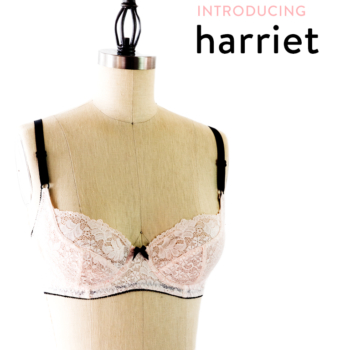
Pin-up Girls #1200 (Classic Bra)

Pin-up Girls #1200 (Classic Bra). This is my favorite basic bra pattern. The grading covers a lot of sizes–all the way down to a 30AAA as well as sizes for narrow band and large cups (up to 30H/I). Available: Bra-makers Supply, Elingeria. Update: Bra-makers Supply now has a shop on Etsy (no kits/fabrics, just patterns).

Elan 645

This is also a very nicely-drafted pattern with a wide range of sizes and is constructed much like the Pin-up Girls pattern. Available: Elingeria, Sew Sassy, Fabric Depot Co., Bonnie’s Pattern Shop (ebay), Vena Cava Design (UK).

Option for larger sizes:

Danglez DB4

This might be a good option for those who need more coverage, especially around the underarm. If you run above an E/DD especially with a smaller band, try Danglez DB3–this one sizes into the I cups and has what’s often called a “powerbar” seam along the side of the cup for support. Available: Elingeria, Danglez (apparently her shop is going to close so there’s a sale!).

Elan 520

This is very similar to the Elan 645 but is made for fuller band/cup sizes. Available: see the Elan pattern above for shops.

You might notice I left out a lot of popular patterns, but I did so because they either have limited size options (Merckwaerdigh, Kwik Sew), limited or specific underwires that won’t be easy for everyone to buy (Make Bra, which uses long underwires and often the same underwires for several cup sizes), or special construction techniques. That includes all partial band patterns, because they are constructed a bit differently and I won’t have time to cover both.

Truly, a basic pattern goes a long way. The tack I’d like to take in this sew-along is to share some ways to modify a bra pattern to your liking–changing the neckline shape, softening the curves, changing the seaming. I’m going to make a very simple version of the Pin-up Girls pattern with few frills and then a modified version with lace and some easy shaping alterations.

Some questions that came up:

Can I leave out underwires?
Yes–with these patterns you can make a supportive bra without them.

Will you make a foam-cup bra?
No, I won’t be making one in the sew-along, but I have a little treat waiting in the wings for some time in February. I’ve written a tutorial showing how I adapted my pattern for foam shaping. (A bra which I haven’t blogged about!)

Just as an FYI, there are two types of foam cup bras: those that use pre-molded cups (usually seamless t-shirt bras) and those that use pieced and sewn foam. The pre-molded cups seem to work best using a pattern specifically designed for them. The latter are sometimes called “cut and sew” bras and use what’s called polylaminate or spacer foam as a lining. (The Make Bra patterns are built around this lining.) Any pattern can really be adapted for it. They’re fun to make because you can use just about any fabric on the outside of the cup without worrying about support. Some of my best RTW bras have this type of lining and I might offer some suggestions later on the sew-along, but if I do it’ll be short and sweet. If this is your first bra, I’d recommend getting used to basic construction without it, so you don’t fight with the foam!

Can I use my own pattern?
If you already have a pattern that fits, or your own personal block, chances are you already have a head start and can follow along for whatever parts you want to follow! I can’t address the particular techniques of your pattern, however. But if it’s similar enough you’ll have no problem and perhaps others can chime in with help!

I hope that covers it! I’ll be back next week with a bit about sizing and materials and then we can start our shopping.

· Comments { 27 }

Bramaking Sew-along: Schedule

Hello everyone! I sat down this week to plan out a schedule for the sew-along, and thought it’d be good to share that first before we dive into choosing a pattern (tomorrow’s post!).

I’ve decided to break up the sew-along into three parts, running just around three weeks. That may seem long to some, but I’d really love for this sew-along to be all about fit and style and getting the most out of your bra pattern. Some of you may want to make more than one (because the second one is always better!). And we’ll have some room to answer any questions that come up. The subjects will roll out a bit like this:

First week: Fitting

  • Tracing the pattern, cutting out a tester bra
  • Sewing the tester bra and first fit
  • Fitting alterations for the band and cups (probably 2 posts)

Second week: alterations for style and aesthetics

  • Changing the neckline shape and strap positions
  • Adjusting for stretch fabrics, changing band styles
  • Major style alteration: changing to a vertically-seamed cup (either two or three-piece)
  • I might add possible surprise posts here!

end of the third week: sewing our bras!

  • Final pattern tweaks and cutting out your bra
  • Assembling cups and linings
  • Assembling the band, sewing in cups and elastic
  • Finishing elastic, channeling, underwires and hooks

This week we’ll make some decisions:

Tomorrow: Picking a Pattern!

Tuesday, December 4: Choosing a size and a way to measure yourself.

Friday, December 7: All about materials! Different types of bra materials and kits, where to find them, along with a list of notions you’ll need.

December 7-January 7: Time to shop and gather and have a Happy Holiday! And I’ll probably eat too much pumpkin pie.

Some Questions!

Do I need a blog to participate?
No, please feel welcome to join. I imagine some of you would like to keep your bras a secret ♥.

Do I need a serger?
No, most bras are sewn entirely on a regular machine. You do need a zig-zag stitch for sewing in the elastic.

Can I make a bra for someone else?
Well, sure! Of course she needs to be comfortable with you measuring her pretty closely and fitting a trial bra.

I’ll answer some more pattern-specific questions in the next post!

And you’ll notice I added a new badge to the main sew-along page. Just because… I’m a graphics person and I love making them! Plus I thought some of you might like a sort of vintage-y alternative. I’ve updated both badges, with link codes.

· Comments { 20 }