Tag Archives | leather sewing

Finally, a Fur Coat!

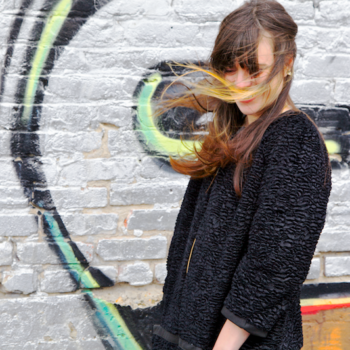
My husband and I are pretty much exact opposites when it comes to photographs. I like still, very non-moving and exacting perspectives and can spend hours fiddling with the camera controls. He often just sets things to auto at all times of day and thinks mostly about composition. He’s kind enough to remember that I want photos that give at least some level perspective of the physical plane because hey, this is also a sewing blog and I want the zipper in focus and folks like details. And I need at least a few where I’m not vortexing into that graffiti.

But I’m definitely not complaining. Derek is enthusiastic about most of what I make and wear and likes making art out of it. It took us a few days to figure out which setting would be best and on top of that we’ve been traveling (which meant that I was totally sewing my coat until the 11th hour before getting on a plane).

We finally found a fun location earlier this week and the sun was kind enough to be lingering behind some light cloud cover. Still, black is hard to get. And the wind was nuts!

The beautiful hair knot I’d managed kept tumbling down left and right and so I just gave up on the hair. I am in desperate need of a haircut anyway. (If pictures could speak, you’d be hearing me saying “my bangs are driving me nuts!” over and over.)

No matter the weather difficulties or the hair anxieties, he encourages me to come out of my shell and show my face to the camera.

But yes! Le coat is done. And it feels good. And I adore it! I’ve already worn it four times because the weather got cold enough. It’s a great feeling to want to wear this and not to abandon it out of sheer boredom from familiarity. I’m still feeling a bit sad that my Lady Grey and white silk blazer, two other labored jacket projects from the last year or so, aren’t getting the wear they deserve. In defense, the Lady Grey was an experiment and I still haven’t figured out how to make its silhouette work with the rest of my clothes.

Speaking of which, although I feared the cocoon silhouette might be a bit much, it works amazingly with some of my basic every day clothes. I tried a few different outfits underneath and most of what worked were shapes that stuck toward the streamlined and narrow, especially from the hem down. If it was a top and jeans they had to be narrow and the top hitting somewhere near my hips. A dress with lots of pleats and drapes looked overdone, but another one with stripes and a columnar look was perfect.

View from the back:

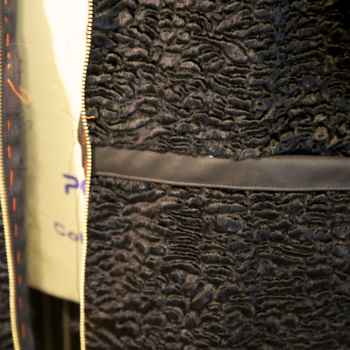
If you’ve been following along my coat process, you might remember I planned to shorten the sleeves, which I did by about an inch and a half. On the muslin they were just a smidge above the wrist but I think it’s better at this “hip” length. I’d also originally intended to use leather strips down the each side of the front zipper. This proved to be more than I wanted to do. It took some careful sewing to enclose the zipper in the leather facings and I didn’t want to push my luck by adding one more leather seam. Anyway, I kinda like that the front closure is just a hint of gold teeth shining through. Simple.

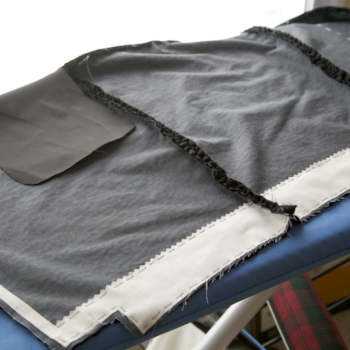
The coat is fully lined in a stretch polyester lining that actually ended up giving it some needed weight and structure, so in the end it’s quite warm and not as drapey as I thought it’d be. I think I’m getting the hang of this lining thing. After learning to draft one for Sherry’s RTW Sew-along, I went back over my notes and adapted it for raglan sleeves.

This was such a fun project to throw myself into and I’m so glad y’all have followed along! (Here’s a link to all my previous entries about the coat, if you’re interested.) The leather adventures may not be over, either. I’ve got some ideas for all those leftover scraps but that is for another day!

Read more · Comments { 13 }

Just a Few Smashes Left

Oh my, is it March already? On my leap year day, I played a bit of hooky and spent a long day sewing, basting, hammering, sewing. The coat is so close and soon, I promise, I will be showing up in it in person!

What’s that, hammering? This might be a good time to introduce you to my friend, the mallet. I highly recommend whacking seams with a hard (preferably non-metal) object at some point in your sewing career–it’s therapeutic.

Whacking, smashing, the Jamie Oliver method of sewing. It’s also just about the only way to flatten intersecting leather seams.

In the end, the leather only occupied such a small fraction of the coat, but made for some very careful and slow sewing. I think I was stitching at snail speed on my machine. The most difficult part was inserting my leather trim neatly around the hip seam.

It’s basically one strip of leather that I pieced together and folded in half. Then I sandwiched it into the hip seam like one would sew piping. The result is a bit bulky especially around the inseam pocket. There was no way I was going to get that folded edge topstitched down neatly without first gluing or tacking it in some way to the fur. Yeah, I had to tape leather to fur. My other newfound friend: Wonder Tape.

For most of the leather seams, I used a teflon foot, which is the white foot you see below. My machine came with this and I’ve occasionally used it on other fabrics that seem to get pushed a lot by a regular foot. (A roller foot is an alternative.)

And there’s the jean-a-ma-jig tool in action. It’s sort of like a fork you stick under your foot. Understitching intersecting seams was much easier with this! (Another way of doing something like this is to slip a folded piece of cardboard under your foot about a half-inch away from the beginning of the bulky part, and sew “off” the cardboard.)

I understitched quite a bit, especially the seams that were going to be edges. On the leather seams that needed to be pressed open, I used double sided fuse tape to permanently hold them down. (Some like to use glue or edge-stitch the SAs down.) These seam allowances are fused-taped and then trimmed near the edges, where there will be an intersecting seam:

On the needle front, I used both leather and microtex needles in size 9, which I had from a previous project. (I found both of these in 20-packs on ebay awhile back.) Both are very sharp and seemed to work well on the lambskin and the fur. Little binder clips are also good to have around, to hold seams together in lieu of pins! I confess I abandoned these because they just kept getting in my way. There were places where I couldn’t baste or pin and I had to hold the layers tight and just pray the fabric didn’t move around too much.

Now back to whacking… just one more hammering session and I’ll be happy enough to sew the lining shut.

Read more · Comments { 8 }

A Bit about Leather Cutting & Fusing

When the forsythia blooms, you know spring is coming. (And an old wise gardener taught me that’s when to prune roses in the south.)

I love these vines. They look very bramble-y climbing all over trees the rest of the year, but are the pride of the south in February. Such a glowing yellow yellow yellow. So I had to break up these posts in black with some color, right? Because I know we are all dreaming of our spring palettes now.

As promised, I wanted to share some tidbits about leather cutting and fusing. There’s a nifty post here about the layout of a hide and how to determine nap–which is kind of like learning the grainline on fabric. You’ll also see which parts are stronger and weaker.

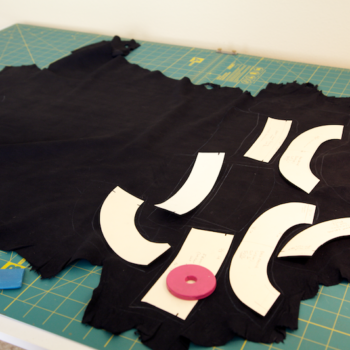
I tried to lay all my facing pieces with the grain going the same direction and still get the most out of the “good” leather. Whatever was left would be cut into strips to piece together for trim. Once I got the general layout of the facings, I loosely traced around the section they’d be cut from so I could block fuse the entire area. My leather is thin and almost as stretchy as stretch denim, so the facings definitely needed some reinforcement.

In case you’re wondering, it’s possible to fuse to leather! I cut off one of the, erm, legs which wouldn’t have been usable to test out my interfacing.

So far, here’s what I’ve learned about fusing leather:

  • If possible use an interfacing that doesn’t require gobs of steam to adhere or melt the glue. It seems like leather can take a lot of heat–I tried everything from the coolest to the wool setting–but lots of steam could possibly damage or dry out the leather (ask how I know!). In my test above, I didn’t use any steam at all, just a dry iron, and it fused perfectly! The ticket is a cool-fuse interfacing (this is the stuff I used), and if your interfacing requires some steam, try using a damp press cloth or misting a small amount from a water bottle.
  • Use a press cloth or teflon shoe. Just in case. I never knew about using press cloths until a couple of years ago, but they really helped in preventing those “shiny” marks on fabrics, which are basically scorch marks. I mostly just use the shoe now, which I think I found for under $20. (It was definitely a good investment as I haven’t scorched fabric since… these are nothing like the coating on the bottom of most irons.) Leather can be ironed. Seriously. This stuff is tough!

After block-fusing the whole facing-pieces area, I traced and cut. It helps to have a pattern stiffer than tissue paper in order to trace off the pieces. I like doing this on most of my patterns but it’s pretty much a necessity with leather since pinning tissue is out of the question. (Alternatively, you could weigh down a pattern and use a rotary cutter.)

The last thing I did was cut out all the strips that I’m piecing together for the trims from the remaining leather. I just used a ruler and rotary cutter for these:

That’s all for today… off to prune and tie up roses with my dear Valentine. That’s kinda romantic, right? (Except for all the thorn cuts!)

Read more · Comments { 2 }

Sewing With Leather, Yeah!

When I got back into sewing a few years ago, I was like a kid in a candy shop. Bras! Tailoring! Jeans! Handbags! I never imagined I’d end up sewing with leather but like so many finer aspects of sewing, it’s not as arcane or specialized as it used to seem.

And it’s so fun! My first leather project was this handbag from Hotpatterns:

It’s a bit lonely. There are other parts, including a strap and a tassel, but I can’t find them at the moment. It’s been a UFO for two years, mostly because I screwed up the binding inside the handles, ripped it out and never started over. Ahh, you know how it goes. But it was a good first experiment. I learned the hard way what kind of interfacing doesn’t work on leather. And I went crazy with the studs.

Anyway, I know there can be a bit of intimidation when approaching materials like leather or faux fur. Perhaps I can take some of the edge off for my fellow stitchers by sharing the process of my faux fur coat? Not out of expertise but jumping in, mistakes and all!

In my previous post about the coat, Sallieoh asked where one could buy these kind of materials so I thought I’d start by sharing a few of my findings, particularly with leather. I wanted black lambskin for my coat trim and serendipitously, Gorgeous Fabrics was selling a few when I started gathering materials. They were at a great price and are absolutely luscious!

The first place I look for leathers is ebay. I don’t live in NYC, sigh. There are gads of leather sellers on ebay, but here are a few places to start:

  • Leatherwise from Santa Cruz is my fave. Beautiful quality, colors and great prices.
  • Fashion Leathers. They sell scraps or small pieces as well.
  • Santos Leather at Etsy. (From Montreal.) Unusual and pretty surplus from a leather designer. She even sells grab bags of scraps that’d be great for little projects.
  • Fabric Mart sells quality skins every so often. I don’t have much experience with this shop but have heard good things.

As you can see by the top picture you can find all sorts of finishes: suede, metallic, distressed, matte, shiny, patent, what have you. Some leathers have finishes on both sides. The leather for my handbag, for example, was pearlized on one side with a gorgeous suede finish on the other. I love those kinds since they’re really versatile. Here are few things I’ve learned about size, weight, and cost:

  • Hides come in different weights, and are either described by weight (ounces) or thickness (mm). For example, my black skin is probably about 1 ounce. It’s very lightweight, almost paper thin, and drapey, and good for a more delicate garment or trim.
  • Skins are usually described in square feet or inches. Lambskin is going to be smaller, of course, than other types of hides like cow or goatskin. The skin pictured above is about 5 1/2 square feet–you can see by the yardstick that at its longest is about 32 inches. Because skins are irregularly shaped and the outer edges a little thinner there’s some creative cutting involved.
  • Prices tend to be higher for lambskins, anywhere from $15 to extremes like $80. You can get absolutely beautiful skins of a decent size for $20. Check to see if they are described as “second quality” or something like that. (Sometimes the lower quality will have dye imperfections or holes, which are still perfectly workable if cost is a concern.)
  • Goatskin and calfskin can also be lightweight and supple as well as less expensive–and give you more square footage to work with! High quality calfskins can be cheaper than ultrasuede or pleather so it’s not always more economical to go for the fake.

Now as for sewing, it’s sooo easy to cut! It’s really a dream to sew! But there are a few good tools to have around and I’ll save the sewing hints for the next post or two. Till then!

Read more · Comments { 5 }